

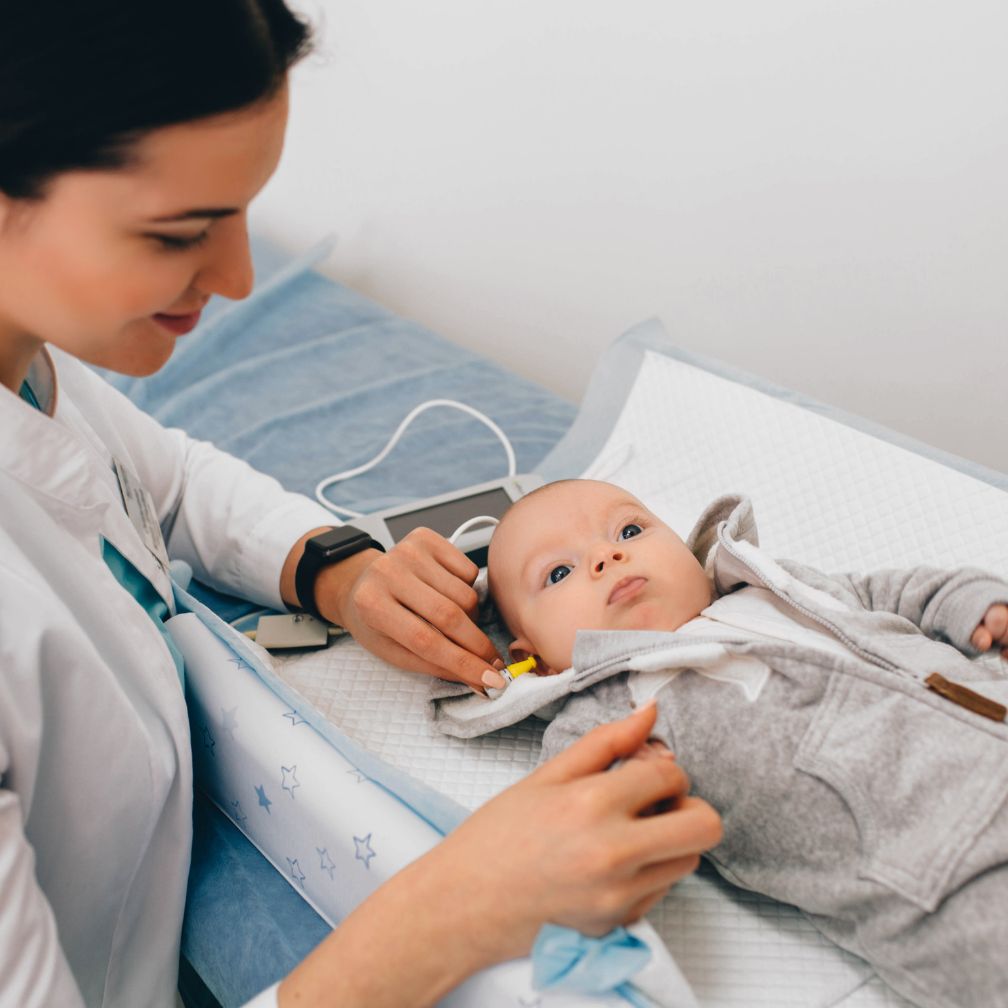
For newly expectant or practicing parents, discovering their infant faces auditory loss can seem profoundly disheartening to navigate. But the positive fact is that because of prompt medical testing and early intervention, young children with hearing deficits are positioned to prosper. Truly, these young ones can develop communication, interactive skills, and deep connections across their social world, bringing about a truly fulfilling life!
Choosing modern hearing aids and surgical cochlear implants yields two reliable clinical methods for helping babies with hearing impairment. In the upcoming sections, we cover their underlying operational methods to assist you in deciding which pathway best serves your youngster.
Unpacking the Foundations of Infant Hearing Loss
Auditory loss in newborn babies can be driven by multiple potential origins, including:
- Specific hereditary genetic markers (even absent any documented parental history)
- Dangerous maternal congenital infections such as cytomegalovirus (CMV) or rubella infection
- Unexpected labor complications, featuring perinatal hypoxia or premature delivery
- Certain clinical medications given during neonatal intensive care stays
Which measure offers the greatest impact? Rapid diagnostic confirmation. For this reason, infants in the United States receive standardized auditory screening prior to hospital discharge. Specialized pediatric auditory doctors systematically apply the recognized “1-3-6” diagnostic framework:
- First-stage auditory screening administered before 30 days of age
- Thorough clinical diagnosis established prior to 3 months
- Targeted treatment (involving medical devices or specialized speech therapy) initiated prior to 6 months post-birth
Meeting these clinical targets provides infants an exceptional path toward healthy speech, expressive language, and cognitive development. Should you need direction concerning these screening milestones, your trusted pediatrician will eagerly guide you!
Pediatric Hearing Aids for Young Babies
For infants diagnosed with mild to severe hearing deficits, specialized hearing aids usually function as the initial care standard. Specialized, ear-level instruments intensify acoustic waves, empowering infants to catch spoken dialogue and natural environmental sounds much more effectively.
Customized infant hearing instruments operate as:
- Fully safe and suitable for young babies only a few weeks old
- Designed featuring flexible, soft ear impressions that adapt as the infant grows
- Equipped with secure battery housing closures and dedicated pediatric safety elements
- Uniquely calibrated by a trained pediatric audiologist to mirror your infant’s unique auditory curve
During physical development, wearable hearing devices demand ongoing updates to ensure snug placement and precise amplification.
Cochlear Implants in Infant Auditory Care
If a young child displays profound sensorineural hearing impairment while showing insufficient progress with hearing aids, audiology teams frequently suggest a cochlear implant. Unlike hearing aids, cochlear implant systems:
- Are integrated into the inner ear through surgery to directly stimulate the auditory nerve
- Direct signals past non-functional hair cells of the inner ear system
- Convert surrounding audio into precise electrical signals that excite the acoustic nerve pathways directly
Integrated cochlear implant systems serve as:
- Formally FDA-cleared for use in infants as young as 9 to 12 months
- Highly effective when paired with early therapy and family support
- Recommended only after a thorough evaluation by a certified audiologist and otolaryngologist
This diagnostic phase features diagnostic imaging, objective hearing assessments, and open dialogue concerning long-term communicative results.
Hearing Aids or Cochlear Implants: Distinguishing Features
- Mild to severe hearing loss relies on Hearing Aids; Severe to profound hearing loss requires Cochlear Implants
- Non-Invasive wearable design: Hearing Aids; Surgical internal implantation: Cochlear Implants
- Acoustic sound amplification: Hearing Aids; Direct conversion to electrical signals: Cochlear Implants
- Application starts during early infancy: Hearing Aids; Implantation starts at 9-12 months: Cochlear Implants
Summary Thoughts: Supporting Your Child’s Hearing Journey
When your child is diagnosed with auditory deficits, you can rely on excellent technological options and compassionate guidance. With active assistance from pediatric hearing professionals, a vast majority of children attain speech and language milestones fully matching their playmates.
Whether your child is a candidate for hearing aids or cochlear implants, early management can make a lifelong difference.
Are you looking for clarity regarding your infant’s hearing development? Call our clinic today to receive a complete diagnostic assessment and personalized rehabilitation plan.